
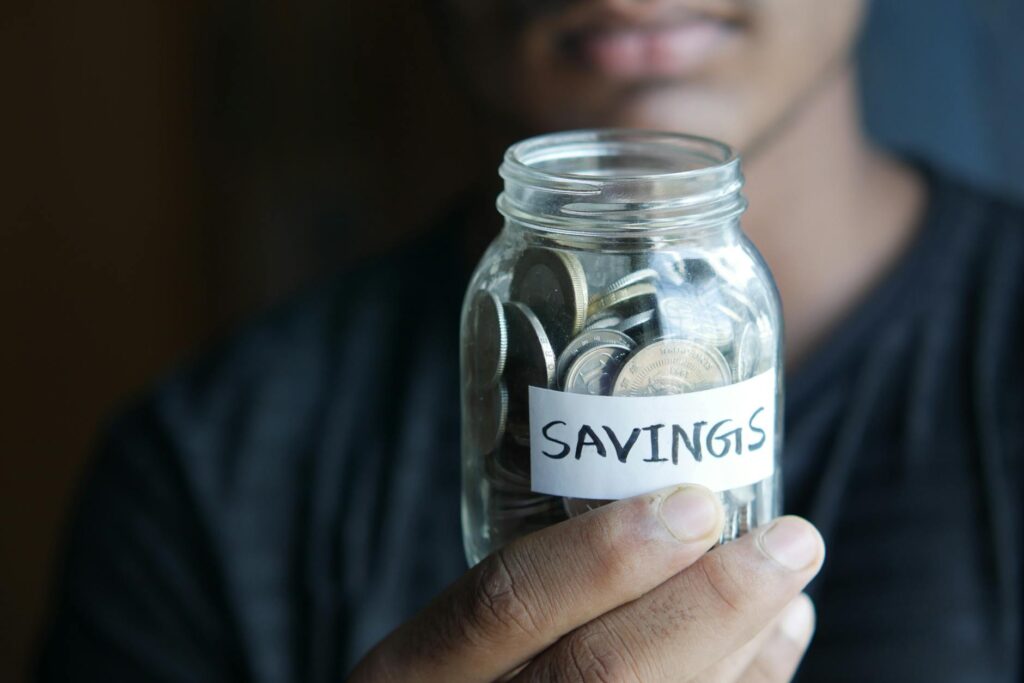
Your car breaks down tomorrow. $800 repair bill. Or your laptop dies the week before a big deadline. Or a medical bill shows up that you didn’t see coming.
Do you have the money to cover it without going into debt?
If the answer is “not really,” you’re not alone. A 2024 Bankrate survey found that nearly 57% of Americans couldn’t cover a $1,000 emergency from savings. For people in their 20s and early 30s, that number is even higher.
An emergency fund is the most boring financial move you can make. It’s also the one that changes everything.
What an emergency fund actually is
It’s cash you keep separate from your regular spending money, set aside for genuine financial emergencies. Vacation money doesn’t count. A sale you want to jump on doesn’t count. A rough week that earned you a treat doesn’t count.
A real emergency: job loss, a car repair you can’t avoid, a medical bill, a burst pipe, emergency travel for family. Having this money set aside means that when life blindsides you, you handle it with cash instead of debt.
How much should you actually save?

The standard advice is 3–6 months of living expenses. That’s solid, but it can feel so far away that people never start. Breaking it into stages helps.
Get to $1,000 first. That covers most common emergencies: a car repair, a vet bill, a minor medical expense. Don’t think past this number until you’re here.
From there, build toward one month of expenses. Add up your non-negotiables — rent, utilities, groceries, transportation — and that’s your target. One month saved is when you actually start to feel the difference.
The full fund is 3–6 months. That’s your buffer against job loss or anything that could knock out your income for a stretch. Single income with no safety net: aim for 6 months. Dual income or a stable job with benefits: 3 is usually fine. Freelancer or contractor: go higher, 6–9 months.
Where to keep it
The fund needs to be accessible within a day or two, kept apart from your everyday checking account, and earning something. Inflation quietly eats cash that just sits there.
That means a high-yield savings account (HYSA). In 2024, the best HYSAs were paying 4–5% APY, compared to roughly 0.46% at most traditional banks. Look for no monthly fees, FDIC insurance, easy transfers, and no minimum balance requirement.
This money isn’t invested. Not in stocks, not in crypto. It’s in a boring savings account that earns a little interest and is there when you need it. That’s the whole job.
How to actually build it

Open a HYSA that’s separate from your main bank. Name it something specific — “Emergency Fund” or “Don’t Touch This.” The physical distance from your spending account adds just enough friction to leave it alone.
Then set up an automatic transfer from your checking account to that HYSA right after each payday. Even $25/week is $1,300 a year. You stop thinking about it, you can’t accidentally spend it, and it grows without you doing anything.
$200/month and you hit $1,000 in five months. $100/month and you’re there in ten.
When you get unexpected money — a tax refund, a bonus, birthday cash — put a chunk straight in until you hit your target. A lot of people build their first $1,000 almost entirely from one tax refund.
Then leave the fund alone. This sounds obvious. It isn’t.
What counts as an emergency (and what doesn’t)
This is where things get blurry. The fund can start to feel like a guilt-free backup account for anything that catches you off guard.
Real emergencies: job loss, a car breakdown you need fixed to get to work, a medical or dental bill, a failed appliance, emergency travel.
Not emergencies: a flight sale, Christmas gifts (those are predictable — budget for them separately), a new phone because yours is old, covering last month’s overspending.
The gut check: could you have predicted this? Could you have planned for it? If yes, it’s a budgeting problem, not an emergency.
What to do after you use it

Using the fund isn’t a failure. It’s the fund doing exactly what it’s supposed to.
Rebuild it the same way you built it. Automate transfers back in. Make rebuilding the top financial priority until it’s back to where it was. One emergency doesn’t have to make the next one worse because the cushion is gone.
What will get in the way
The most common problem is dipping into it regularly until it stops being an emergency fund and just becomes money you’ll spend. Keeping it at a different bank helps. If transferring takes a day, you’re much less likely to touch it on a whim.
Waiting until you “have more money” to start is the other one. There’s no income level where saving gets easy. People at every income build emergency funds. The amount per month matters less than starting. $25/week beats zero.
One thing to sort out if you’re also carrying high-interest debt: build the starter $1,000 first, then attack the debt hard, then build the full fund. Having nothing saved while aggressively paying debt leaves you one surprise bill away from going right back into it.
The thing nobody talks about
The practical benefits are obvious. What doesn’t get mentioned much is what having a cushion does to your stress levels.
When the money is there, a car making a weird noise stops being a financial crisis. It’s just a thing to deal with. A job you hate becomes something you could actually leave if you needed to. A bad month doesn’t spiral into three months of catching up.
Financial anxiety is real and it’s exhausting. An emergency fund doesn’t fix every money problem. But it removes a lot of the fear.
Start with $500
Open a HYSA today. Set up a $25/week automatic transfer. Name it something that means something to you. Leave it alone for six months.
You’ll be surprised how fast it grows when you stop watching it.