

If you’re in your 20s, you have something most investors would pay a lot of money for: time.
Here’s what that means in actual numbers. Invest $200/month starting at 22, earn an average 8% annual return, and you’ll have around $700,000 by 65. Start the same plan at 32, same amount and same return, and you end up with around $310,000. A $390,000 difference just from starting 10 years earlier.
That’s compound interest. Your money earns returns, those returns earn returns, and over enough time the snowball gets enormous. The earlier you start, the less you need to put in to end up with a lot.
Most people in their 20s know they should be investing. Most of them aren’t. If that’s you, this is for you.
Why people don’t start
The same three excuses come up constantly.
“I don’t have enough money.” You don’t need a lot. Some brokerages let you start with $1. Most index funds have no minimum. The idea that investing is for people with big salaries is just wrong.
“I don’t know what I’m doing.” Fair. The financial industry is full of jargon, conflicting advice, and products designed to confuse you. This article cuts through most of it.
“I’ll do it when I’m more settled.” Every year you wait is a year of compounding you’ll never recover. There’s no settled moment. People who say they’ll start next year are still saying it at 35.
What investing actually is
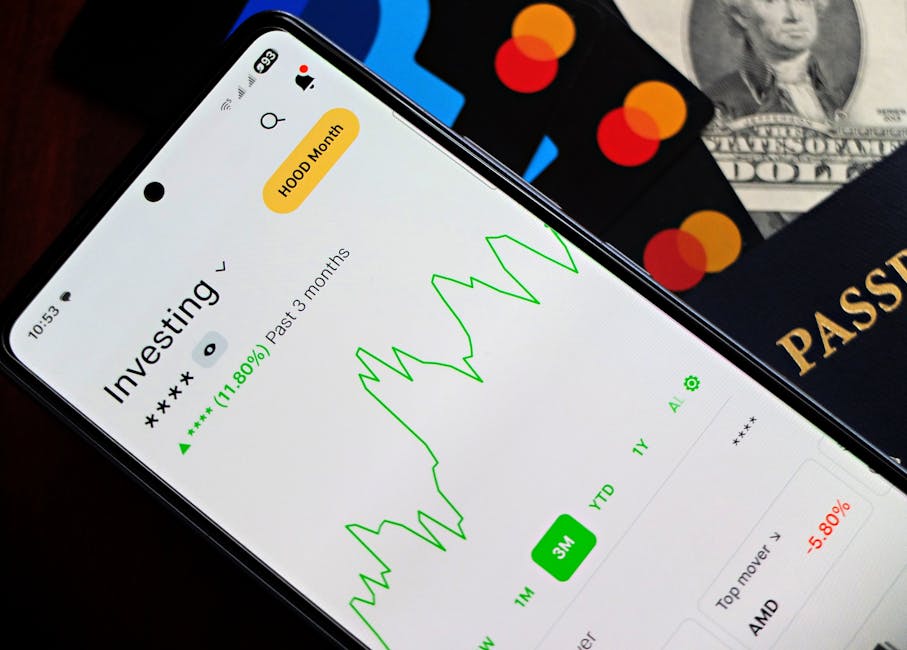
Investing is putting money to work so it grows over time instead of sitting still.
When you put money in a savings account, it earns a small amount of interest. When you invest, you’re buying something you expect to grow in value: a piece of a business (stock), a basket of businesses (index fund), a loan to a government (bond).
The stock market goes up and down in the short term. Over long periods, it has historically gone up. The S&P 500 has returned an average of roughly 10% per year since 1957, through crashes, recessions, and everything else.
You’re not trying to get rich overnight. You’re letting time and the overall growth of the economy work for you.
Step 1: Get the free money first
If your employer offers a 401(k) match, start here.
A 401(k) is a retirement account tied to your job. You contribute before taxes, it grows tax-deferred, and you pay taxes when you withdraw in retirement. The match is when your employer puts in money on top of yours, often 50 cents for every dollar you contribute, up to 6% of your salary.
That’s a guaranteed 50% return on part of your money before you’ve done anything else. If you’re not contributing enough to get the full match, you’re leaving part of your salary on the table every month.
No 401(k) through work? Skip to Step 2.
Step 2: Open a Roth IRA

A Roth IRA is a retirement account you open yourself, separate from any employer. You put in money you’ve already paid taxes on, it grows tax-free, and when you withdraw in retirement you pay no taxes on any of it — not even decades of gains.
In 2024, the contribution limit is $7,000/year, about $583/month. The income limit is $161,000 for single filers, well above what most people in their 20s earn.
The reason a Roth makes sense early: you’re probably in a lower tax bracket now than you’ll be in your 40s and 50s. Paying taxes on the money now and getting tax-free growth forever is usually the better deal at your age.
Opening one takes about 15 minutes. Fidelity, Vanguard, and Charles Schwab all offer free Roth IRAs with no account minimums.
Step 3: Buy index funds, not individual stocks
Once the account is open, you need to decide what to actually buy. For almost everyone starting out, the answer is a broad market index fund.
An index fund tracks a market index like the S&P 500. Instead of picking individual stocks, you own a small slice of hundreds or thousands of companies at once. When the overall market does well, you do well.
Individual stock picking sounds more interesting. It mostly doesn’t work. Most actively managed funds — where professionals pick stocks for a living — underperform basic index funds over time, after fees. This has been documented across decades of data.
Three funds that come up constantly for people starting out:
- VTI (Vanguard Total Stock Market ETF): the entire US stock market in one fund
- VOO (Vanguard S&P 500 ETF): the 500 largest US companies
- FXAIX (Fidelity 500 Index Fund): Fidelity’s equivalent of VOO, with no expense ratio
Pick one. Keep it simple for now.
Step 4: Automate it and leave it alone

The biggest threat to your investment returns isn’t a market crash. It’s forgetting to invest, spending the money before it gets there, or panicking and selling at the wrong time.
Set up automatic contributions. Most brokerages let you schedule recurring deposits directly from your bank account. Tie it to your paycheck so the money moves before you see it.
This also removes the urge to time the market. A lot of people hold off because the market “feels too high right now.” Nobody consistently times the market correctly, including professional investors. Putting money in consistently over time means you naturally buy more shares when prices are low. That’s all you need.
How much should you invest?
A sensible order of operations:
- Contribute enough to your 401(k) to get the full employer match
- Fund your Roth IRA ($7,000/year in 2024, or as much as you can manage)
- If there’s still money left, go back to the 401(k) or open a regular brokerage account
Can’t afford any of that right now? Start with $25/month. The amount matters far less than the habit. You can raise it as your income grows.
A standard retirement benchmark is saving and investing 15–20% of gross income. Most people in their 20s paying rent and managing debt can’t hit that, and that’s fine. It’s a target, not a requirement.
Things that will trip you up
Waiting for the perfect entry point. The market always feels a little wrong: too high, too uncertain, too weird. People who wait for ideal conditions mostly never invest. Pick a date and start.
Checking the balance constantly. The market goes down sometimes, a lot occasionally. If you’re watching daily, you’ll panic and sell when you should hold. Check in quarterly at most.
Cashing out when you change jobs. When you leave, roll your 401(k) into your new employer’s plan or into an IRA. Don’t cash it out. You’ll pay income tax plus a 10% early withdrawal penalty, and you’ll lose years of compounding you can’t get back.
Getting complicated too fast. Individual stocks, options, crypto, day trading: all of these feel more active than buying an index fund and waiting. Most of them also underperform index funds over time. Stay boring for the first few years.
Thinking you need to pay off all debt before you invest. High-interest credit card debt, yes, clear that first. But student loans at 4–6% don’t need to stop you — the long-term expected return from index funds has historically beaten that rate.
The honest part
Investing in your 20s can feel pointless. The amounts are small. The balance moves slowly. Nothing seems to be happening.
That’s normal. Compounding is quiet at the start and loud later. People who started at 22 and kept going are sitting on very different numbers at 55 than people who started at 35 with the same income.
You still have the early years. Most people wish they hadn’t wasted them.
Start now.