

Most business plan guides will tell you to write a 40-page document with market size projections, competitor matrices, and five-year financial forecasts. That’s fine if you’re raising venture capital. For an online business, it’s overkill, and it’s one of the reasons so many people spend months planning and never actually start.
A useful business plan for an online business is lean, specific, and honest. It forces you to think through the parts that actually determine whether the business will work, without burying you in paperwork that’ll be outdated in three months.
Why you need a plan even if you’re starting small
A business plan isn’t a document for investors. It’s a thinking tool. The act of writing it down forces you to answer questions you’d otherwise gloss over: who exactly is your customer, how are you reaching them, what does it cost to run the business, and when will it break even.
Most online businesses that fail don’t fail because the idea was bad. They fail because the founder never thought through the revenue model, underpriced their services, or had no plan for finding customers beyond hoping people would show up. A business plan, even a one-page one, forces those conversations to happen before they cost you money.
If you’re still in the side hustle phase and thinking about turning it into something more serious, a business plan is the dividing line between a hobby and a business.
What a lean online business plan actually covers
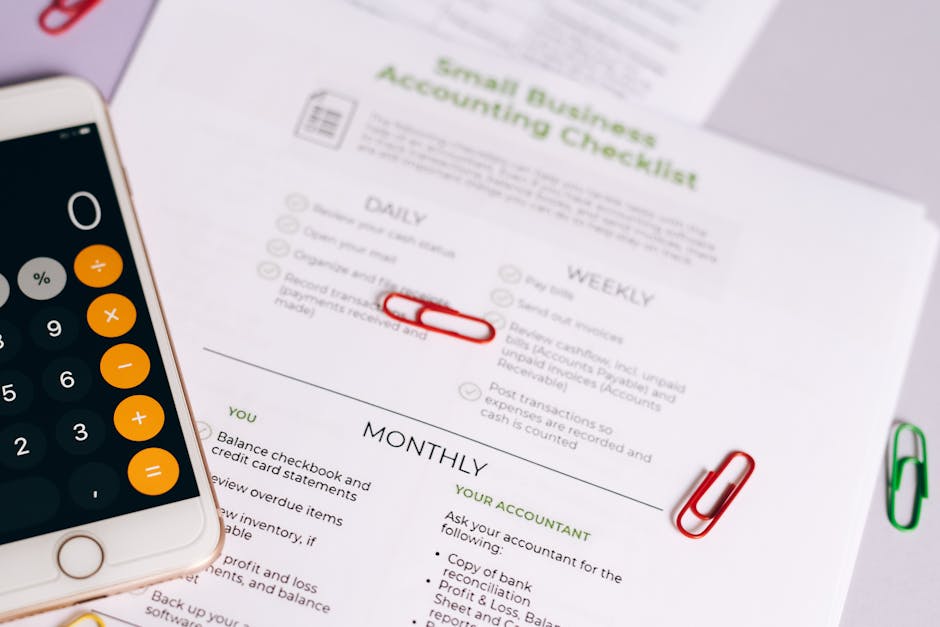
Forget the 40-page template. A working plan for an online business needs seven things:
- What the business does and who it’s for
- Your revenue model
- Your marketing plan
- Financial projections
- Startup costs
- Goals and milestones
- A reality check on your assumptions
If you can answer those seven things clearly and honestly, you have a better business plan than most people who’ve spent weeks writing one.
Section 1: What your business does and who it’s for
Start with a single sentence that explains what you do and who you do it for. Not a mission statement. A description. Something like “I sell Notion productivity templates to freelancers” or “I offer social media management to e-commerce brands with under $1M in annual revenue.”
If you can’t write that sentence clearly, you haven’t defined the business yet.
Then go one level deeper: what problem does your customer have, and how do you solve it? The more specific you are here, the easier every other section becomes. “People who need better organisation” is too vague. “Freelancers who lose track of client projects and deadlines” is specific enough to build a product around.
Pair this with a short description of your business model: selling services, physical products, digital products, or building a content business. Each has different economics and different paths to revenue. If you’re still deciding, our guide to starting an online business covers the trade-offs between each model.
Section 2: Your revenue model
This is where most plans fall apart. It’s easy to describe what you sell. It’s harder to map out how the money actually flows.
Answer these four questions:
- What are you charging, and how (per hour, per project, per unit, per month)?
- What does it cost you to deliver each sale?
- What’s your margin?
- How many customers or sales do you need to break even each month?
Work backwards from a monthly income target. If you want to earn $3,000 a month from a freelance service priced at $1,500 per project, you need two clients a month. Is that realistic given your available hours and how you plan to generate leads? That question is worth answering before you quit anything.
For product businesses, think about your average order value and your conversion rate. If 2% of website visitors buy and your average order is $30, you need roughly 5,000 visitors a month to make $3,000. Where are those visitors coming from?
Section 3: Your marketing plan
How will customers find you? This is the section most first-time business owners leave vague, and it’s the one that matters most.
Pick two or three channels that make sense for your business and go deep on them rather than spreading thin across everything. The right channels depend on what you’re selling and who you’re selling to. Freelance services grow fastest through LinkedIn, direct outreach, and referrals. Digital products do well on Pinterest, Etsy, and email. E-commerce brands typically lean on paid social and SEO.
For each channel, write down a specific tactic and a goal. Not “be active on Instagram” but “post three times a week targeting freelance designers and send traffic to the product page.” Then give each channel a realistic monthly time or budget allocation so you’re committing to something.
Email marketing is worth including from the start regardless of your model. Mailchimp’s free plan covers up to 500 contacts and gives you a list you own, unlike any social platform. Build it early.
Section 4: Financial projections

You don’t need a spreadsheet with six decimal places. You need a realistic month-by-month view of revenue, expenses, and whether the business breaks even — and when.
Start with startup costs: domain, website, tools, software subscriptions, branding, legal registration. Add up what you need to spend before you make your first dollar.
Then project your monthly numbers for the first twelve months. Be conservative on revenue. Most businesses take longer to reach their targets than planned. Be honest on expenses — it’s easy to forget monthly subscriptions, transaction fees, and the occasional tool upgrade.
Build this into the same spreadsheet where you track your personal finances. A business that looks profitable on paper but doesn’t account for how it fits into your monthly budget will create cash flow problems you didn’t see coming.
For tools, Google Sheets handles most early-stage financial planning well and costs nothing. If you want software built specifically for business plans, LivePlan is the most widely used paid option and walks you through projections step by step. Notion works well for keeping the whole plan in one place if you’re already using it for project management.
Section 5: Goals and milestones
Set specific, dated targets. Not “grow revenue” but “reach $1,000 in monthly revenue by the end of month three.” The more concrete the goal, the easier it is to tell whether you’re on track or need to change something.
A useful milestone list for an early online business:
- First paying customer (aim for week two, not month three)
- First $1,000 in revenue
- Break-even month
- First month where revenue covers your own time at a rate you’re happy with
Review these monthly. If you’re consistently missing milestones, it’s a signal: either the targets were unrealistic or something in the model needs adjusting. Either way, you need to know.
Download the business plan template
We built a spreadsheet that covers all seven sections above, with prompts in each section to keep you specific rather than vague.
Download the business plan template
It opens in Excel, Google Sheets, or Apple Numbers. Work through it section by section before you spend a dollar on the business.
Mistakes that make business plans useless
Writing for an imaginary investor is the first one. If nobody’s asking to see this plan, write it for yourself. That means being honest about risks, weak points, and things you don’t know yet. A plan that flatters you is worthless.
Treating projections as predictions is the second. Financial projections are scenarios, not forecasts. Build a conservative case and a realistic one. If the conservative case doesn’t work, the model has a problem worth solving before you go further.
Making it too long is the third, and arguably the most common. A five-page plan you actually use beats a forty-page plan you wrote once and never looked at again. If a section doesn’t change how you run the business, cut it.
A plan gets you started, not to the finish line
Writing the plan is useful. Finishing the plan and never starting is the trap.
Work through the seven sections. Check that the numbers make sense. Then start. The plan will be wrong in places — every plan is. What it gives you is a clear sense of what you’re trying to achieve, and something concrete to measure your progress against.
Once the business is running and revenue starts coming in, think early about where that money goes. Starting to invest from the first profitable month puts compounding to work before the income feels significant enough to bother — which is exactly when it matters most.