
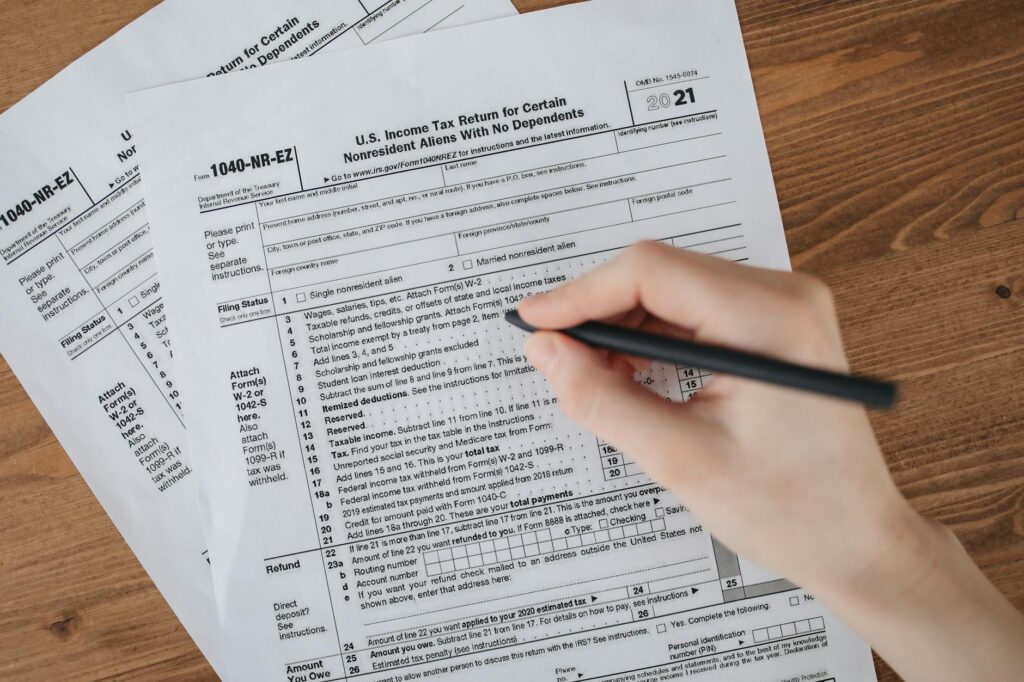
Nobody teaches you how to do your taxes. You finish school, start earning money, and suddenly there’s a government deadline with real penalties attached, and the expectation that you’ll figure it out.
For most first-timers, filing is much less complicated than it looks. The jargon is intimidating, but the actual process usually takes an hour or two once you know what you’re doing. This guide covers both the US and UK — the systems are different, and both are worth understanding.
Do you actually need to file?
In the US
Most employees need to file a federal tax return if their gross income exceeds the standard deduction for their filing status. For the 2024 tax year (the return due in 2025), that threshold is $14,600 for single filers under 65. Earn less than that from all sources combined and you may not be required to file — but filing is how you claim a refund if too much was withheld from your paychecks, so it’s often worth doing anyway.
Self-employed people have a lower bar: net self-employment income of $400 or more requires filing regardless of total income. That includes freelance work, gig economy earnings, selling online, and any side hustle income. If you’ve been earning money outside a regular job without declaring it, this applies to you.
In the UK
Most UK employees don’t need to file a tax return at all. Tax is deducted automatically through PAYE (Pay As You Earn), so if your only income is from an employer without any unusual complications, HMRC handles it for you.
You need to register for Self Assessment and file a return if you:
- Are self-employed (sole trader) with income over £1,000
- Are a company director
- Earn over £100,000 from any source
- Have untaxed income: rental income, savings interest above your personal savings allowance, foreign income, or significant investment gains
- Received child benefit while earning over £60,000 (the High Income Child Benefit Charge)
HMRC has an online checker if you’re unsure. Registering late comes with penalties, so it’s better to check early than assume you’re off the hook.
Key deadlines
Missing a tax deadline is expensive. Both countries charge penalties that add up fast.
US deadlines
April 15 is the standard deadline for filing your federal return and paying any taxes owed for the previous calendar year. If it falls on a weekend or holiday, it shifts to the next business day.
You can request an automatic six-month extension to October 15, but this only extends the deadline to file, not to pay. Tax owed is still due on April 15. You’ll owe interest and possibly a late payment penalty on anything unpaid after that date.
Many states have their own income tax deadlines, usually matching the federal date but worth confirming for wherever you live.
UK deadlines
The UK tax year runs April 6 to April 5. For a Self Assessment return covering the year ending April 5, the key dates are:
- October 5: deadline to register for Self Assessment for the first time
- October 31: deadline to file a paper return
- January 31: deadline to file online and pay any tax owed
Most people use the January 31 deadline. Miss it and you face an immediate £100 penalty, with more added the longer you leave it. After three months, daily penalties begin.
What to gather before you start
Pull this together before you open the tax form — it saves a lot of back and forth.
For US filers
Your employer sends W-2 forms by January 31, showing your wages and taxes already withheld. You’ll receive a 1099-NEC for freelance or contract income over $600, a 1099-INT for bank interest, and a 1099-DIV for investment dividends. You’ll also need your Social Security number (or ITIN), your bank account routing and account number for any refund, and records of deductible expenses if you’re self-employed or plan to itemise. If you had marketplace health insurance, you’ll need Form 1095-A too.
For UK filers
You’ll need your UTR number (Unique Taxpayer Reference), which HMRC sends when you register for Self Assessment. Keep it safe — you’ll use it every year. Your employer provides a P60 showing total pay and tax deducted for the year (or a P45 if you left mid-year). If you’re self-employed, pull together invoices, payment records, and bank statements for all income, plus records of any allowable business expenses. You’ll also need your National Insurance number and details of any other income: savings interest, rental income, dividends.
What counts as income — and what can reduce your tax bill
In the US
Nearly everything counts as income: wages, tips, freelance earnings, investment returns, rental income, even prize winnings. The IRS is thorough.
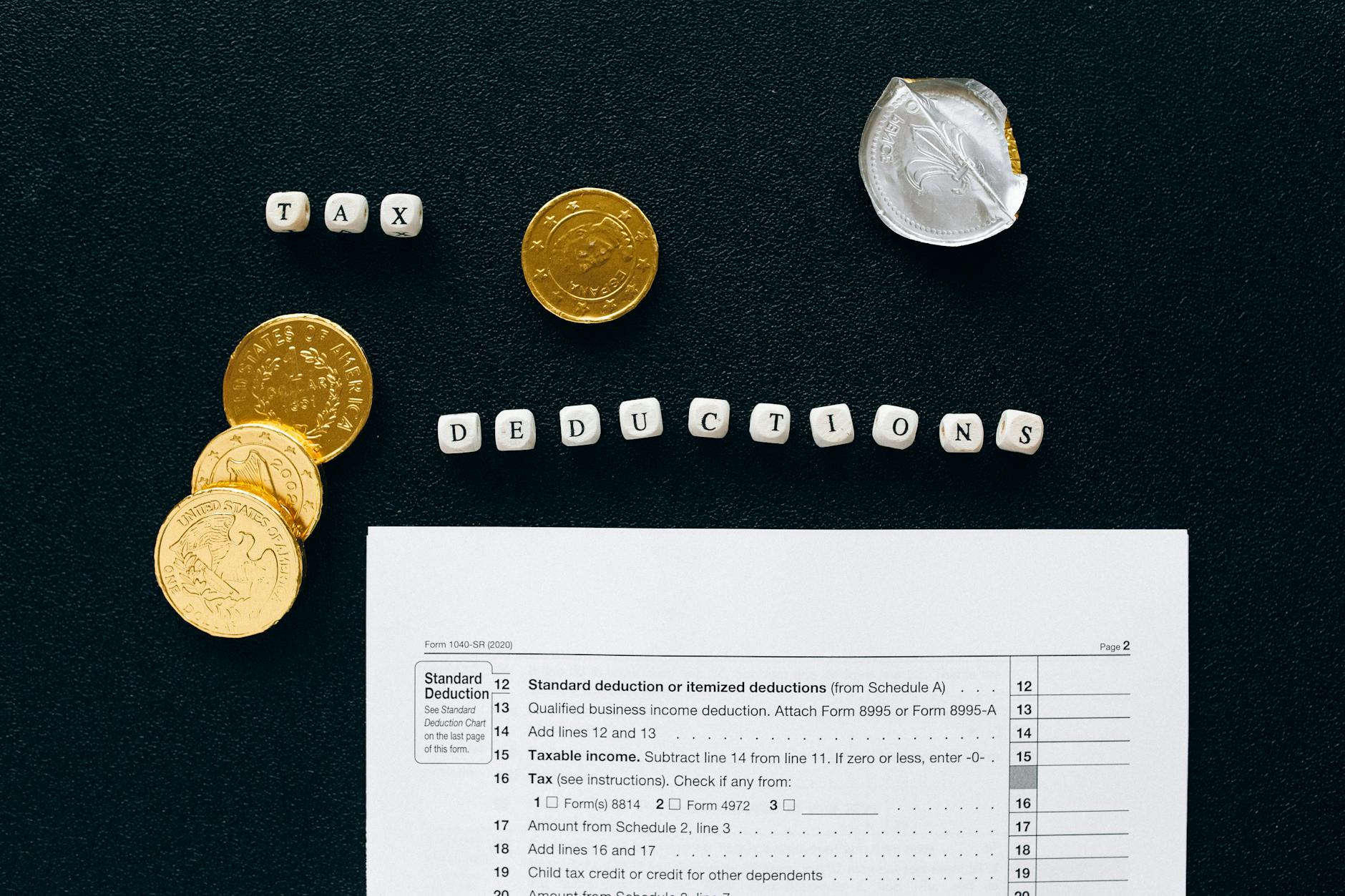
What reduces your bill is either the standard deduction or itemised deductions. You choose one or the other. The standard deduction for 2024 is $14,600 for single filers and $29,200 for married filing jointly. Most people take it because it’s simpler and, for those without a mortgage, usually larger than what itemising would produce. You claim it automatically with no receipts required.
Itemised deductions make sense if your qualifying expenses exceed the standard amount. These include mortgage interest, state and local taxes up to $10,000, charitable donations, and large medical expenses. For most first-timers, standard deduction wins.
Beyond deductions, tax credits reduce your actual bill rather than just your taxable income. The Earned Income Tax Credit (EITC) is worth checking if you’re on a lower income — it’s refundable, meaning you can receive money back even if you owe no tax. Worth a look.
In the UK
Every UK taxpayer has a personal allowance of £12,570 for 2024/25. Income below that is tax-free. Above it: 20% up to £50,270, 40% up to £125,140, and 45% above that.
If you’re self-employed, you can deduct allowable business expenses from your income before tax. These include equipment and tools used for work, business mileage at 45p per mile for the first 10,000 miles, a proportion of phone and broadband costs, a portion of home running costs if you work from home, and professional subscriptions or training. You can’t deduct personal expenses, clothing (unless it’s a uniform), or the commute to a regular workplace. HMRC’s guidance on allowable expenses is worth reading once before your first return.
How to actually file
Filing in the US
IRS Free File is available if your adjusted gross income is below around $84,000. It gives access to free software from commercial providers. Use IRS.gov directly rather than searching for the software provider yourself — some make the free version deliberately hard to find on their own sites.
IRS Direct File is a newer option that lets you file straight with the IRS at no cost. It’s available in a growing number of states and works well for simple situations: employment income, standard deduction, basic credits.
If your taxes are more complex — self-employment, multiple states, investments — paid software is worth it. A CPA for your first year can also help while you learn the ropes.
The process: enter your personal information, report all income from your W-2s and 1099s, choose standard or itemised deductions, apply any credits, and you’ll see your refund or balance due. E-filing is faster and more accurate than paper. Refunds typically arrive within 21 days when you set up direct deposit.
Filing in the UK
Start at HMRC’s website. You’ll need a Government Gateway account — set this up before October if it’s your first time, since registering for Self Assessment takes a few weeks and HMRC posts the activation code to your home address.
The online form walks through each section: employment income (pulled from your P60), self-employment income and expenses, other income sources, and any pension contributions or charitable donations that affect your calculation. HMRC calculates your bill automatically once you submit. You can pay online, by bank transfer, or by direct debit.
One thing that catches first-timers: if you’re newly self-employed, you’ll start making payments on account. HMRC asks you to pay half your estimated next year’s tax in January and the other half in July, on top of your actual bill. Budget for a larger January bill in year one.
Common mistakes first-timers make
Forgetting side hustle income. Money earned from freelance work, selling online, or any side hustle is taxable. In the US, platforms must send a 1099-K if you received over $5,000 through payment processors in 2024, but you owe tax whether or not you receive a form. In the UK, the £1,000 trading allowance covers small amounts, but anything above that needs to be declared.
Not keeping records during the year. Trying to reconstruct twelve months of expenses in January is awful. A basic spreadsheet updated monthly, or any free accounting app, makes filing significantly easier. Keep receipts for anything you plan to deduct.
Missing the registration deadline in the UK. You can’t just file a return — you have to register first. The deadline is October 5 for the previous tax year. Start self-employment in April 2024 and you needed to register by October 5, 2024. Easy to miss if nobody tells you.
Choosing the wrong filing status in the US. Your status (single, married filing jointly, head of household) affects your bracket and standard deduction. Head of household applies if you’re unmarried and supporting a dependent — it gives a better rate than single and is worth checking.
Skipping quarterly estimated taxes if you’re self-employed in the US. Employees have tax withheld automatically. Self-employed people don’t. If you expect to owe more than $1,000 in federal tax for the year, the IRS expects quarterly payments in April, June, September, and January. Skip them and you’ll owe a penalty on top of the bill in April.

Taxes get easier every year
The first time is the hardest because you don’t know what to expect. Once you’ve done it, the process is familiar and the paperwork makes sense. The bigger habit worth building is tracking income and expenses throughout the year rather than scrambling at deadline time. A few minutes a month prevents a genuinely stressful few hours in April or January.
If you want to understand how your pay actually breaks down before tax, what to do with your first paycheck covers the basics. And once you know what’s being withheld, negotiating your salary becomes a more grounded conversation — you understand what the take-home actually looks like.