

Around 45 million Americans have little to no credit history, according to the Consumer Financial Protection Bureau. In the UK, the picture is similar — millions of people, especially young adults, have a thin credit file or none at all.
The frustrating thing is that without credit history, it’s hard to get credit. And without credit, you can’t build history. It’s a catch-22 that catches most people in their early 20s off guard.
Starting from zero is more straightforward than most people expect. You don’t need to take on loads of debt or spend years waiting. You just need to understand how the system works and give it something to work with.
What is a credit score and how is it calculated
A credit score is a three-digit number that lenders use to assess how risky it is to lend you money. The higher your score, the more likely you are to get approved for credit cards, loans, car finance, and mortgages — and at better interest rates.
In the US, scores run from 300 to 850 on the FICO scale. In the UK, each of the three main credit reference agencies (Experian, Equifax, and TransUnion) has its own scoring scale. Experian runs 0 to 999, Equifax 0 to 700, and TransUnion 0 to 710. Different lenders use different agencies, so your score can vary depending on who’s checking.
What goes into your score
In the US, your FICO score breaks down into five weighted factors:
- Payment history (35%) — whether you pay on time
- Amounts owed / credit utilisation (30%) — how much of your available credit you’re using
- Length of credit history (15%) — how long your accounts have been open
- Credit mix (10%) — whether you have a variety of credit types
- New credit (10%) — how many recent applications you’ve made
In the UK, the specific weightings aren’t published, but the same factors matter, especially payment history and utilisation.
Payment history alone makes up more than a third of your FICO score. Miss payments and your score takes a serious hit. Pay consistently and on time, and everything else falls into place more easily.
How to start when you have no credit history
The catch-22 of credit is real, but there are a few routes into the system that don’t require an existing history.
Get a credit-builder card
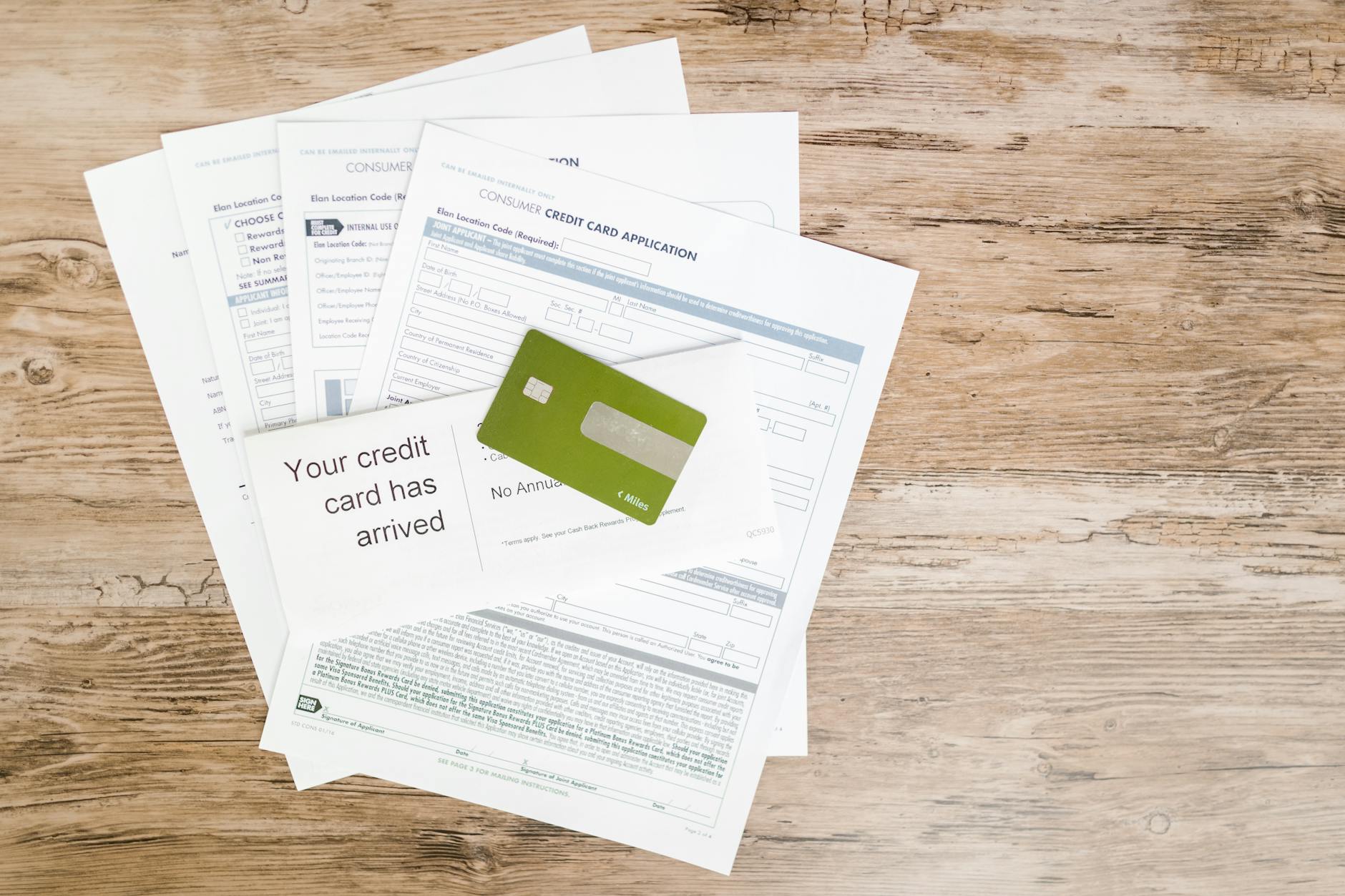
The most common starting point is a credit-builder card. In the US, this is typically a secured credit card, where you put down a cash deposit (usually $200–$500 / £150–£350) that becomes your credit limit. It looks and works like a regular card, and the activity gets reported to the credit bureaus each month.
In the UK, unsecured credit-builder cards are more common. Providers offer cards specifically for people with thin or no credit files. They come with lower limits and higher APRs, but that only matters if you carry a balance.
The rule with any credit card: pay the full balance every month. These cards exist to build a record, not to borrow money. If you pay in full, the high APR is irrelevant. Setting up autopay or a direct debit for the full balance removes the risk of accidentally missing a payment.
Become an authorised user
If you have a parent or close family member with a long, clean credit history, ask to be added as an authorised user on one of their credit card accounts. In the US, their account history can appear on your credit report, giving your score a head start without you needing to apply for anything.
In the UK, being a joint account holder creates a “financial association” that links your credit files. That’s useful if their credit is strong, but worth thinking through carefully if it isn’t. Authorised user status alone doesn’t create the same link in the UK, so the benefit is more limited.
Try a credit-builder loan
A credit-builder loan works differently to a standard loan. Instead of receiving money upfront, you make monthly payments that are held by the lender. Once you’ve paid the full amount, the funds are released to you, and every payment has been reported to the credit agencies.
In the US, products like Self and Credit Strong operate this way. In the UK, Loqbox and Creditspring offer similar models. You come out of it with a record of on-time payments and a small pot of savings. Not bad for a year of modest monthly contributions.
Get your rent payments reported
Most landlords don’t report rent payments to credit agencies, but regular, on-time rent is exactly the kind of evidence a thin credit file needs. If you’ve been renting for years without it counting, you’ve been leaving points on the table.
In the US, services like Experian Boost can add rent and utility payments to your Experian report. In the UK, CreditLadder and Canopy report rent payments to Experian or Equifax. Most are free or low cost and take minutes to set up.
Habits that keep your score moving in the right direction
Once you have a credit product open, the score builds through consistent behaviour over months and years.
Pay on time, every time
This one isn’t negotiable. In the US, a payment that’s 30 or more days late can drop your FICO score by 60 to 110 points, depending on where your score started. In the UK, a missed payment stays on your credit file for six years.
Automation is the answer. Set up autopay (US) or a direct debit/standing order (UK) for at least the minimum payment due. Ideally, set it for the full balance so you never carry debt by accident. Then leave it alone and let the payments stack up.
Keep your credit utilisation low
Utilisation is the percentage of your available credit you’re currently using. If your card limit is $1,000 / £800 and you have an $800 / £640 balance, your utilisation is 80%, which looks risky to lenders even if you pay it off in full each month.
Stay below 30% as a general rule, but lower is better if you’re actively trying to build your score. Some people aim for under 10% when pushing for quick gains.
Your balance gets reported to the bureaus on your statement closing date, not your payment due date. If you make a large purchase and pay it down before the statement closes, it reports a lower balance. If your limit feels too low to stay under 30% comfortably, you can often request a credit limit increase after 6 to 12 months. More available credit with the same spending automatically lowers your utilisation.
Space out your applications
Every time you apply for credit, the lender runs a “hard inquiry” or “hard search” on your file. One or two a year is normal and barely affects your score. A cluster of applications in a short window signals financial stress to lenders, even if that’s not what’s going on.
Hard inquiries stay on your US report for two years but only actively affect your score for about one year. In the UK, they drop off after 12 months. Only apply for credit when you actually need it and are reasonably confident you’ll be approved. Many UK providers offer eligibility checkers that use a soft search and won’t affect your score.
How to track your progress
In the US, you’re entitled to a free report from each of the three bureaus annually at AnnualCreditReport.com. Many banks and card issuers also offer free FICO score access in their apps. In the UK, you can check your full report for free via ClearScore (Equifax data), Credit Karma (TransUnion data), and Experian’s free tier.
Check your report at least once a year. Errors are more common than most people realise: wrong addresses, accounts that aren’t yours, payments marked late that weren’t. Any error can be disputed with the relevant agency and removed from your file.
Checking your own score is a “soft inquiry” and has zero impact. Check as often as you like.

Mistakes that can set you back
Most credit mistakes aren’t dramatic. They’re just things nobody mentioned.
Closing old accounts feels logical — why keep a card you’re not using? But closing it reduces your total available credit (which pushes up utilisation) and can shorten your average account age. Unless the card charges an annual fee you’re not getting value from, leave it open and use it occasionally.
Applying for several cards at once, hoping one will be approved, stacks up hard inquiries and can make lenders nervous. Space out applications and check for soft-search eligibility tools before committing to a full application.
Ignoring your credit file means errors can sit there unchallenged for years. A wrong entry can affect your ability to get approved for things that actually matter. The fix takes minutes once you find it; finding it is the part most people skip.
And perhaps the most common mistake: using a credit card to spend money you don’t actually have. A credit card is a tool for building history, not a way to extend your budget. Carrying a balance means paying interest, and high-interest credit card debt is far easier to accumulate than to clear. If you’re already stretching your budget, building a monthly budget that actually works is the right first step.
How long does it actually take
Starting from zero, you need at least six months of credit activity to generate a FICO score in the US. In the UK, three to six months of activity is typically enough for the main agencies to produce a score.
From there, reaching a good score (670 or above on the FICO scale, or the rough UK equivalent) usually takes one to two years of consistent on-time payments, low utilisation, and no major negative marks.
That sounds slow. But the right time to build credit is before you need it. If you’re planning to rent a flat, buy a car on finance, or apply for a mortgage in the next few years, your score matters. Starting now gives future-you options that starting later won’t.
Make sure the foundations are solid first. A small emergency fund, even $500 / £400, is what stands between an unexpected bill and a missed payment. If you recently started earning, what to do with your first paycheck covers how to set yourself up properly.

Credit is a tool, not a trap
A good credit score won’t make you wealthy, but it does change what’s available to you — better rates on loans, more landlords willing to rent to you, less stress when something big comes up. Building it takes a while. The actual steps take about an afternoon to set up.
The people who struggle with credit usually aren’t irresponsible. They just didn’t know this stuff. Now you do.